True Seller Profit
Free Ecommerce Profit Calculators
Calculate net profit, product margin, seller fees, pricing, shipping impact, and break-even ROAS before you launch, advertise, or scale an ecommerce product.
Sample product
$49.00 sale
Profit Scenario Lab
Put three pricing decisions on the same balance sheet
Compare price, shipping, fees, returns, and ad spend side by side, then save or share the result.
Compare scenarios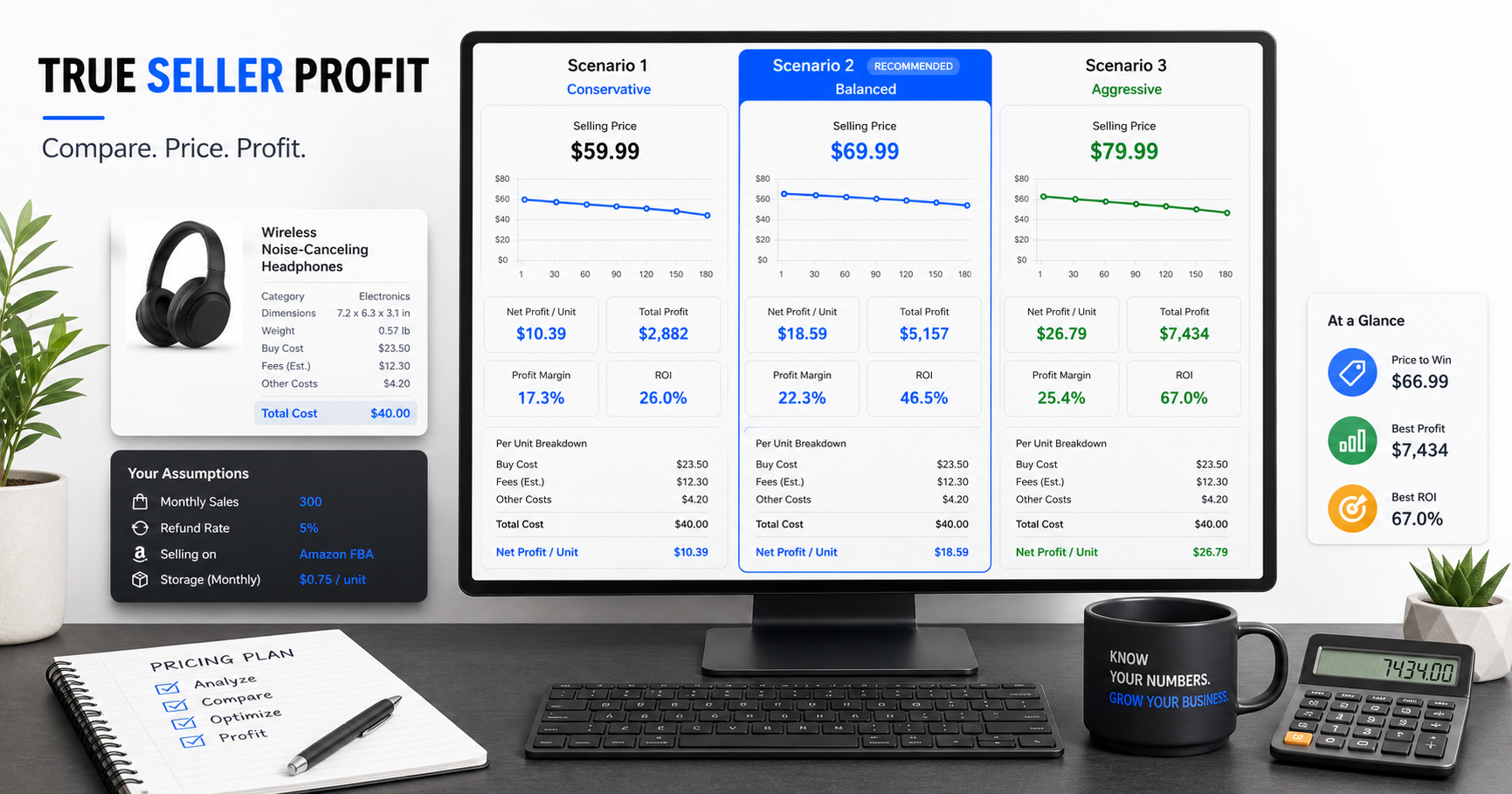
Profit calculators for ecommerce sellers
Choose the calculator that matches your selling channel or decision. Each tool updates instantly and includes real-world costs sellers often miss.
Ecommerce Profit Calculator
Use this free ecommerce profit calculator to estimate net profit and margin after product cost, seller fees, shipping, ads, returns, and taxes.
Open calculatorShopify Profit Calculator
Use this free Shopify profit calculator to estimate product margin after cost, shipping, transaction fees, payment processing, ads, and returns.
Open calculatorEtsy Profit Calculator
Use this free Etsy profit calculator to estimate listing, transaction, payment and Offsite Ads fees, shipping costs, net profit, margin, and ROI.
Open calculatorAmazon Seller Profit Calculator
Use this Amazon FBA profit calculator to estimate seller margin after referral fees, fulfillment, storage, inbound shipping, PPC, returns, and product cost.
Open calculatorBreak-even ROAS Calculator
Use this free break-even ROAS calculator to estimate allowable ad spend, break-even CPA, profit before ads, and a safer target ROAS for ecommerce.
Open calculatorProduct Pricing Calculator
Use this product pricing calculator to estimate a profitable selling price from product cost, shipping, packaging, seller fees, and target margin.
Open calculatorShipping Cost Impact Calculator
Compare current and new ecommerce shipping costs to estimate profit impact, margin loss, and the price increase needed to preserve product profit.
Open calculatorHow to calculate ecommerce profit
Start with product revenue, including shipping charged to the customer. Subtract product cost, marketplace and payment fees, fulfillment, packaging, advertising, estimated returns, and seller-paid taxes to find net profit.
Use the ecommerce profit calculator for a complete order-level estimate, or choose a platform-specific tool when seller fees and fulfillment rules matter.
Common ecommerce costs sellers forget
FAQ
What is a good ecommerce profit margin? +
Many ecommerce products land between 10% and 30% net margin, but the right target depends on category, fulfillment model, return rate, and ad costs.
What costs should I include in ecommerce profit? +
Include product cost, platform fees, payment processing, shipping, packaging, ads, refunds, taxes or VAT when relevant, and any product-level operating costs.
Does this calculator include taxes? +
The general ecommerce calculator includes an optional tax or VAT percentage. Other calculators focus on product economics and fees, so add tax as an other cost if needed.
Are platform fees accurate? +
The calculators use editable fee inputs and common defaults where useful. Always check your own marketplace, payment provider, plan, country, and currency.
How do I calculate profit after ad spend? +
Subtract your ad cost per sale from revenue after product cost, shipping, packaging, platform fees, payment fees, returns, and other costs.
How do I calculate profit margin? +
Subtract all product-level costs from revenue to find net profit, divide net profit by revenue, then multiply by 100. For example, $20 profit on $100 revenue is a 20% profit margin.
How does a profit margin calculator work? +
A profit margin calculator totals revenue and entered costs, calculates the remaining profit, and expresses that profit as a percentage of revenue. Better estimates include seller fees, shipping, ads, and expected returns.
How do I calculate gross profit on a calculator? +
Gross profit is revenue minus direct product cost. Net profit goes further by subtracting shipping, marketplace fees, payment processing, advertising, returns, taxes when applicable, and other selling costs.
How much profit did I make on a sale? +
Add the selling price and customer-paid shipping, then subtract product cost, fulfillment, packaging, fees, advertising, expected returns, and other order costs. The remainder is estimated net profit per sale.
How often should I update product pricing? +
Review pricing whenever product cost, shipping rates, ad performance, return rates, marketplace fees, or competitor pricing changes materially.